
For a Chicago credit repair firm, your website is the only employee that never goes home — but for most firms it behaves like one that clocked out at 5pm. It shows a phone number nobody answers after hours and a contact form that drops into an inbox until morning. Meanwhile, the person who just got denied for an apartment in Logan Square or had their report pulled for a car loan in Cicero is on your site at 10pm, ready to talk — and a silent page is why they leave and message the next firm instead. An AI chat widget that greets that visitor, qualifies them, and books the consultation 24/7 is the single highest-leverage thing you can bolt onto an existing credit repair website, because in this niche the lead you miss is a lead you can’t buy back.
Here’s the structural fact underneath it: Google prohibits credit-repair ads outright (Google Ads credit repair policy). You can’t retarget the visitor who bounced at midnight. Every prospect on your Chicago site got there through organic search, the map pack, a referral, or your reputation — channels you spent months earning. Letting them hit a dead page is throwing away the most expensive thing you own. This post is the operator’s case for fixing it, built on real speed-to-lead and live-chat data — not hype. We sell the operating system, never the outcome: a chat widget gathers information and books; it never promises a deletion or a score change.
Table of contents
- Your Chicago website is your most expensive silent employee
- Where the leads actually go: the speed-to-lead problem
- Why chat beats a form and a phone number
- What an AI chat widget actually does (and never does)
- The Chicago demand math
- Contact form vs AI chat widget vs live human chat
- How to add one without CROA risk
- Frequently asked questions
- About the author
- Sources
Your Chicago website is your most expensive silent employee
Start with the channel math, because it’s what makes credit repair different from a plumber or a dentist. Most local businesses can paper over a slow website with paid ads — miss a visitor, and a Google or Meta ad brings them back tomorrow. Credit repair firms can’t. Google’s financial-services advertising policy prohibits credit-repair ads outright (Google Ads credit repair policy; see also the broader financial products policy).
That single restriction reshapes the economics of a Chicago firm:
- Every lead is earned, not bought. Your prospects arrive through organic search, the Google map pack, referrals from loan officers and realtors, and your review reputation. Each one cost real time and money to produce.
- There’s no retargeting safety net. When a bought-traffic business loses a visitor, an ad re-engages them. When you lose one, they’re gone to whichever firm’s site actually talked back.
- The searcher is in a hurry and in a bad mood. A denied loan or a pulled report is an urgent, emotional moment. That person is opening three firms’ sites in ten minutes and going with whoever engages first and sounds trustworthy.
So the real question isn’t “should we spend more on marketing.” It’s “are we actually catching the expensive traffic we already earn?” For most firms the honest answer is no — because a static website can’t hold a conversation, and the visits that leak most are exactly the after-hours, weekend, and lunch-break ones a human front desk was never awake to catch. (For the phone side of this same problem, see our companion piece on why credit repair firms need an AI receptionist; for how leads arrive in the first place, the AI lead generation playbook.)
Where the leads actually go: the speed-to-lead problem
Two things kill an earned lead: nobody answers, or somebody answers too late. The data on both is old, replicated, and brutal.
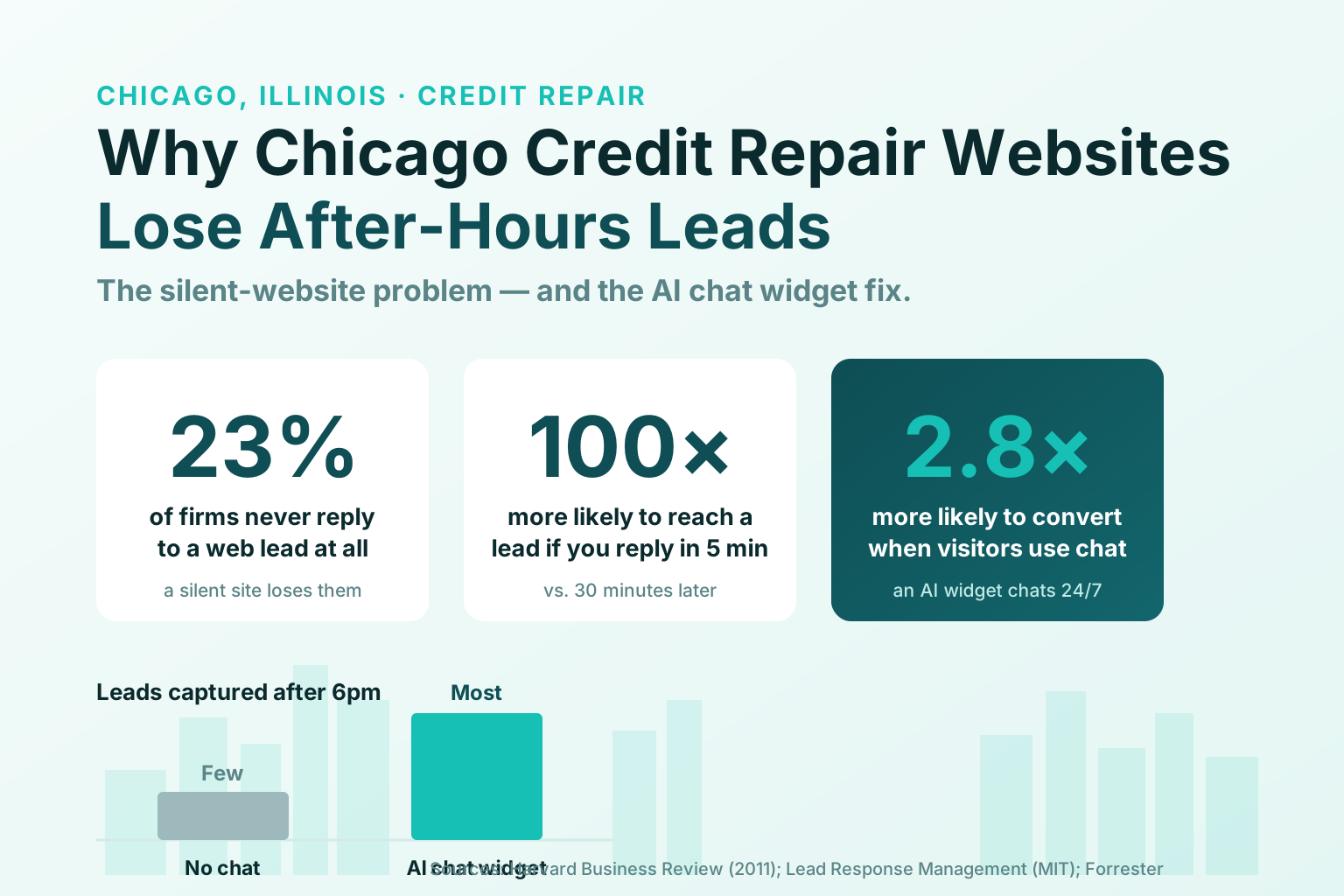
The most-cited number in inbound sales comes from the MIT-analyzed Lead Response Management study: contacting a new web lead within 5 minutes versus 30 minutes makes you about 100× more likely to reach the person and 21× more likely to qualify them (Lead Response Management / MIT). The curve is nearly vertical in the first few minutes — which is precisely the window a form-and-inbox website cannot cover after hours.
And most competitors are slow, which is your opening. When Harvard Business Review audited 2,241 U.S. companies, only 37% responded to a web lead within an hour, the average response took 42 hours, and 23% never responded at all (Harvard Business Review, 2011). Nearly a quarter of businesses simply let earned web leads die.
That gap is the whole opportunity. You don’t have to out-market the firm across town; you have to answer while they don’t. Here’s what that HBR reality looks like side by side — most of the market is either slow or silent:
Share of 2,241 audited U.S. companies by web-lead response speed. Source: Harvard Business Review, “The Short Life of Online Sales Leads” (2011). The “replied, but slower” band is the remainder of firms that eventually responded.
A large share of the traffic your Chicago site earns arrives when the office is dark — evenings after work, weekends, and late at night when someone finally sits down to deal with their credit. A website is the only thing open at those hours. If all it offers is a form that lands in an unread inbox, the earned visitor has no way to get an answer, and the speed-to-lead window closes before anyone on your team is even awake.
Why chat beats a form and a phone number
Given how fast the window closes, the question becomes: what actually captures a late-night visitor? Not a contact form — it’s a one-way message into a void with no reply for hours. Not always the phone, either — plenty of people won’t call a stranger about something as sensitive as their credit, especially at 11pm.
Chat splits the difference, and consumers reward it. Live chat is consistently the support channel people say they prefer, ahead of phone and email, and it earns some of the highest satisfaction ratings of any channel (Kayako live chat statistics). More to the point for a credit repair firm’s bottom line: website visitors who engage web chat are about 2.8× more likely to convert than those who don’t (Forrester).
The catch is that “live chat” traditionally meant a human sitting in the chat console — which is fine at 2pm on a Tuesday and useless at midnight or during a consult. That’s the gap an AI chat widget closes: it brings live-chat responsiveness to the hours and moments a human can’t cover, and hands off to your team when a real person should take over.
What an AI chat widget actually does (and never does)
An AI chat widget for a credit repair site is a branded chat box on your pages, wired into your CRM, that does four jobs on autopilot — and deliberately stops short of a fifth.
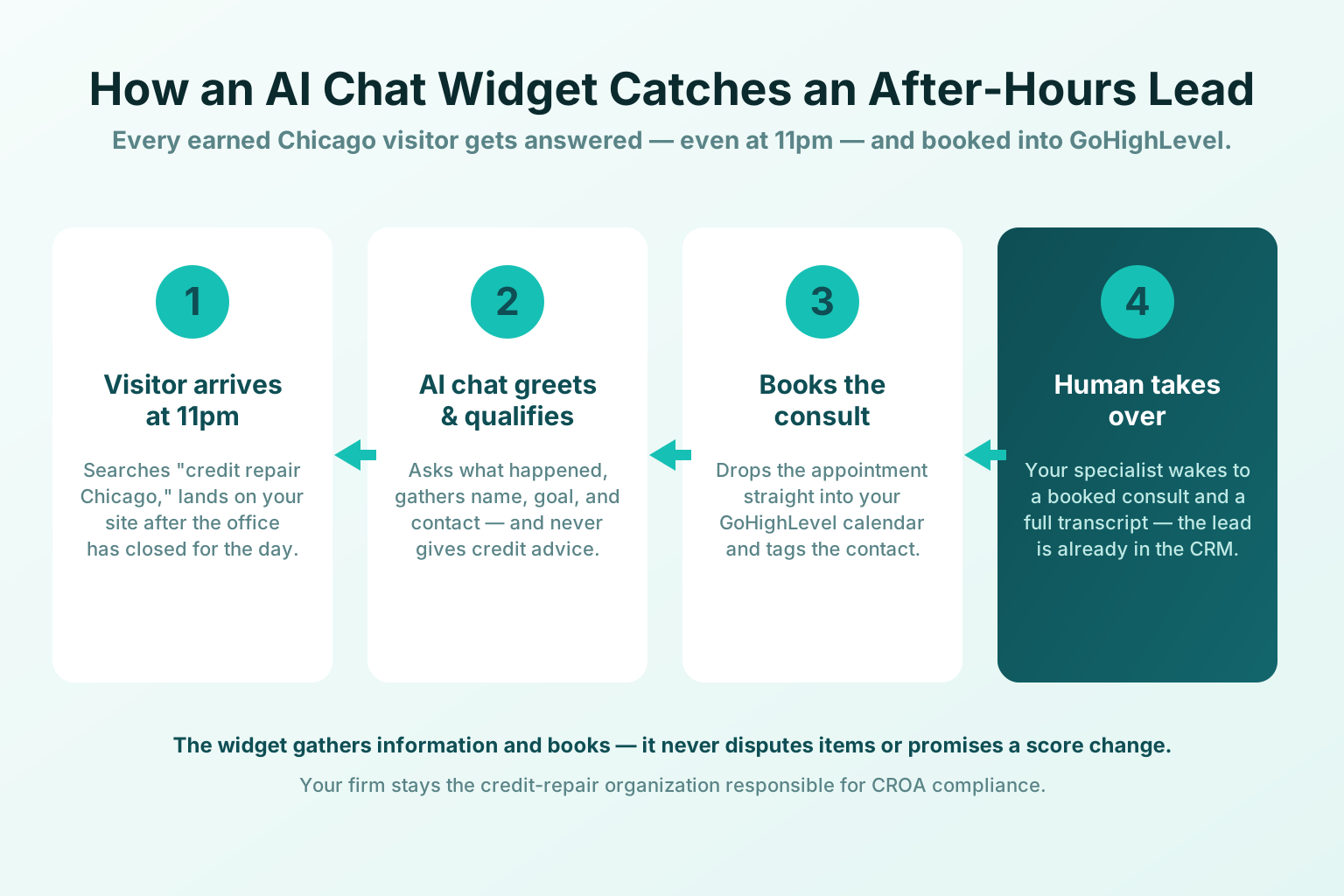
- Greets every visitor instantly. No wait, no “we’re closed” message — the box opens the moment someone lands on a key page, day or night.
- Qualifies with branching questions. It asks what happened (denial, pulled report, monitoring an error), gathers name and contact, and captures the goal — the intake your front desk would do, done in seconds.
- Books the consultation. It offers real open slots and drops the appointment straight into your GoHighLevel calendar, then tags the contact so your workflows fire.
- Logs everything and hands off. The full transcript and lead sit in your CRM by morning, so a human specialist picks up a booked, pre-qualified consult instead of a cold voicemail.
Done right, the widget is the front half of a system that also needs a fast, well-built site to live on — a slow page loses the visitor before the chat even opens, which is the page-speed argument we made for Astro sites — and a booking flow that actually holds the appointment, which is where reducing consultation no-shows comes in.
The Chicago demand math
The reason this matters so much in Chicago is simply how many people are looking. The Chicago–Naperville–Elgin metro is the third-largest in the country at roughly 9.4 million residents (U.S. Census via USAFacts, 2024). Nationally, about 29.6% of consumers carry a subprime FICO score under 670 (Experian, 2025) — nearly three in ten adults who are candidates for exactly the kind of help a Chicago firm provides.
You do not have a demand problem. In a metro that size, the constraint is capture: of the earned visitors already hitting your site, how many get answered before they open the next firm’s page. Adding a widget that answers 100% of them, 24/7, is the cheapest lever you have — you’re not buying new traffic, you’re finally collecting on the traffic you already paid to earn. Compared with the cost of acquiring a brand-new financial-services client, which agency benchmarks put in the high hundreds to well over a thousand dollars (First Page Sage fintech CAC), converting one more visitor you already have is close to free.
Contact form vs AI chat widget vs live human chat
Not every “chat” solution is equal. Here’s how the three common front-door options compare for a credit repair site that earns traffic around the clock.
Three ways to answer a Chicago credit repair visitor
| Plan | Contact form + phone | AI chat widget recommended | Live human chat |
|---|---|---|---|
| Price | Status quo | Best coverage | Staff time |
| Feature 1 | One-way message into an inbox, no reply for hours | Answers every visitor instantly, 24/7/365 | Great responses — when someone is at the console |
| Feature 2 | Zero coverage nights, weekends, or during consults | Qualifies and books straight into GoHighLevel | No coverage after hours or during a busy day |
| Feature 3 | Nervous prospects won't call about credit | Low-friction for sensitive credit questions | Costs staff hours you may not have |
| Feature 4 | Speed-to-lead window closes before you see it | Hands off to a human for anything substantive | Quality swings with whoever is staffing it |
| Feature 5 | Cheapest — and the biggest silent leak | Scoped to never give credit or legal advice | Best paired with AI for overflow and off-hours |
| This is what leaks | Get one built | Works part-time only |
The AI widget isn’t a replacement for your people — it’s the layer that makes sure a human never inherits a cold lead. During the day it handles overflow; after hours it is the front desk. If you’d rather have a person running the whole GHL back office once leads start flowing in, a dedicated GoHighLevel VA is the complement.
How to add one without CROA risk
Adding an AI chat widget to a Chicago credit repair site is a short project when it’s scoped right. The order that keeps you compliant:
- Write the guardrails first. Before a single response is configured, define what the bot may say (process, general FAQs, scheduling) and what it must never say (timelines, outcomes, deletions, score claims, credit or legal advice). This is the CROA spine of the build.
- Script the qualifying flow. Map the branching questions — what happened, goal, contact info — that mirror your human intake, ending in a booked consult, not an opinion.
- Wire it into GoHighLevel. Connect the widget to your calendar and pipelines so a booking creates the contact, applies the right tags, and triggers your onboarding and reminder workflows.
- Add the human handoff. Any question outside the script — anything substantive about someone’s specific situation — routes to a live person or a callback task, every time.
- Review transcripts weekly. Read what the bot said, tighten the script, and confirm it stayed in its lane. This is your compliance audit trail and your conversion tuning loop in one.
That guardrails-first sequence is why this is a custom build, not a plug-in you drop in blind — a generic chatbot that free-associates about someone’s credit is a compliance liability. A CROA-aware consultation chatbot built for the niche is scoped to gather and book only, which is exactly what keeps your firm safe while it captures the after-hours traffic you’re currently losing.
Frequently asked questions
What is an AI chat widget for a credit repair website?
It's a branded chat box on your website, wired into your CRM, that greets every visitor instantly, qualifies them with branching questions (what happened, their goal, and contact details), books a consultation onto your calendar, and logs the full conversation for your team. It handles greeting, intake, and scheduling 24/7 — not advice. Anything substantive routes to a human, which keeps the firm inside CROA guardrails.
Why can't a Chicago credit repair firm just run ads to replace missed website leads?
Because Google's advertising policy prohibits credit-repair ads outright, so you can't retarget or re-buy a visitor who bounced. Every Chicago lead is earned through organic search, the map pack, referrals, and reputation — which makes each after-hours bounce pure waste. Fixing capture (answering the visitor) is far cheaper than trying to generate replacement demand you're not even allowed to advertise for.
Does responding fast to a web lead really matter that much?
Yes — it's one of the most-replicated findings in inbound sales. The MIT-analyzed Lead Response Management study found that contacting a new web lead within 5 minutes versus 30 makes you about 100x more likely to reach them and 21x more likely to qualify them. And Harvard Business Review found only 37% of 2,241 audited companies replied within an hour, with 23% never responding at all — so simply answering instantly puts you ahead of most competitors.
Will an AI chat widget create CROA compliance risk?
Not if it's scoped correctly. Configure it to greet, qualify, and book only — and to never quote a timeline, estimate results, promise a deletion or score increase, or give credit or legal advice. Every substantive question routes to a human, and you review transcripts weekly. Your firm remains the credit repair organization responsible for CROA compliance; the widget is an intake and scheduling tool, not a counselor. That guardrails-first scoping is why it should be a custom build, not a generic drop-in bot.
How is an AI chat widget different from live human chat or an AI receptionist?
Live human chat is great when someone is staffing the console, but it has no coverage after hours or during a busy day. An AI chat widget answers every visitor 24/7 at a flat cost and hands off to a human for anything substantive. An AI receptionist does the same job on the phone line, for callers who prefer to talk; the chat widget covers visitors who'd rather type — especially about something as sensitive as credit. Most firms benefit from both: the receptionist catches calls, the widget catches web visitors, and neither ever advises.
How long does it take to add an AI chat widget to my credit repair website?
A scoped consultation chatbot is typically a few weeks of work: define the CROA guardrails, script the qualifying flow, wire it into GoHighLevel's calendar and pipelines, add the human handoff, and test. The bulk of the effort is the guardrails and the GHL integration, not the chat box itself — which is exactly what makes it a compliant, niche-specific build rather than a generic plug-in.
About the author
Simone Braxton spent eight years running back-office operations for credit-repair firms before moving full-time into GoHighLevel implementation. She specializes in turning client onboarding and follow-up into repeatable workflows that keep firms inside CROA guardrails while cutting the manual follow-up that burns out small teams. She writes about onboarding sequences, compliance documentation, and the operational details — like where earned leads leak — that decide whether a firm scales or stalls.
Related posts
- Why Credit Repair Firms Need an AI Receptionist — the phone-line half of the same 24/7 capture problem.
- AI Lead Generation for Credit Repair — how the leads arrive before the widget answers them.
- Astro vs GoHighLevel Websites for Credit Repair — why a fast site is the ground the widget stands on.
- Reduce No-Shows on Credit Repair Consultations — making the booked consult actually happen.
Sources
- Harvard Business Review — “The Short Life of Online Sales Leads” (2011)
- Lead Response Management / MIT — Lead Response study
- Forrester — “Retailers Without Chat: A Missed Opportunity”
- Kayako — Live Chat Statistics
- Google Ads — Credit repair services policy
- Google Ads — Financial products and services policy
- U.S. Census via USAFacts — Chicago metro population (2024)
- Experian — Subprime score study (2025)
- First Page Sage — Fintech customer acquisition cost benchmarks
- FTC — Credit Repair Organizations Act (CROA)